Same Supplies, Better Box: Closing the Loop on Campus Shipping
How one campus building manager is rethinking the supplies behind scientific discovery –helping labs be more circular.
The campus electric load is forecasted to exceed 80% capacity each day this week. Please reduce electricity from 2 to 6 p.m. this week to protect our overall campus power supply. (sustainable.stanford.edu/power-smart)

Smarter takeout is on the menu–creating a circular system that replaces single-use packaging with containers that are made to be returned and used again.
Download the Friendlier app from the App Store or Google Play.
Prefer not to download the app? Scan the QR code on the container, enter your email & three-digit pin located on the container.
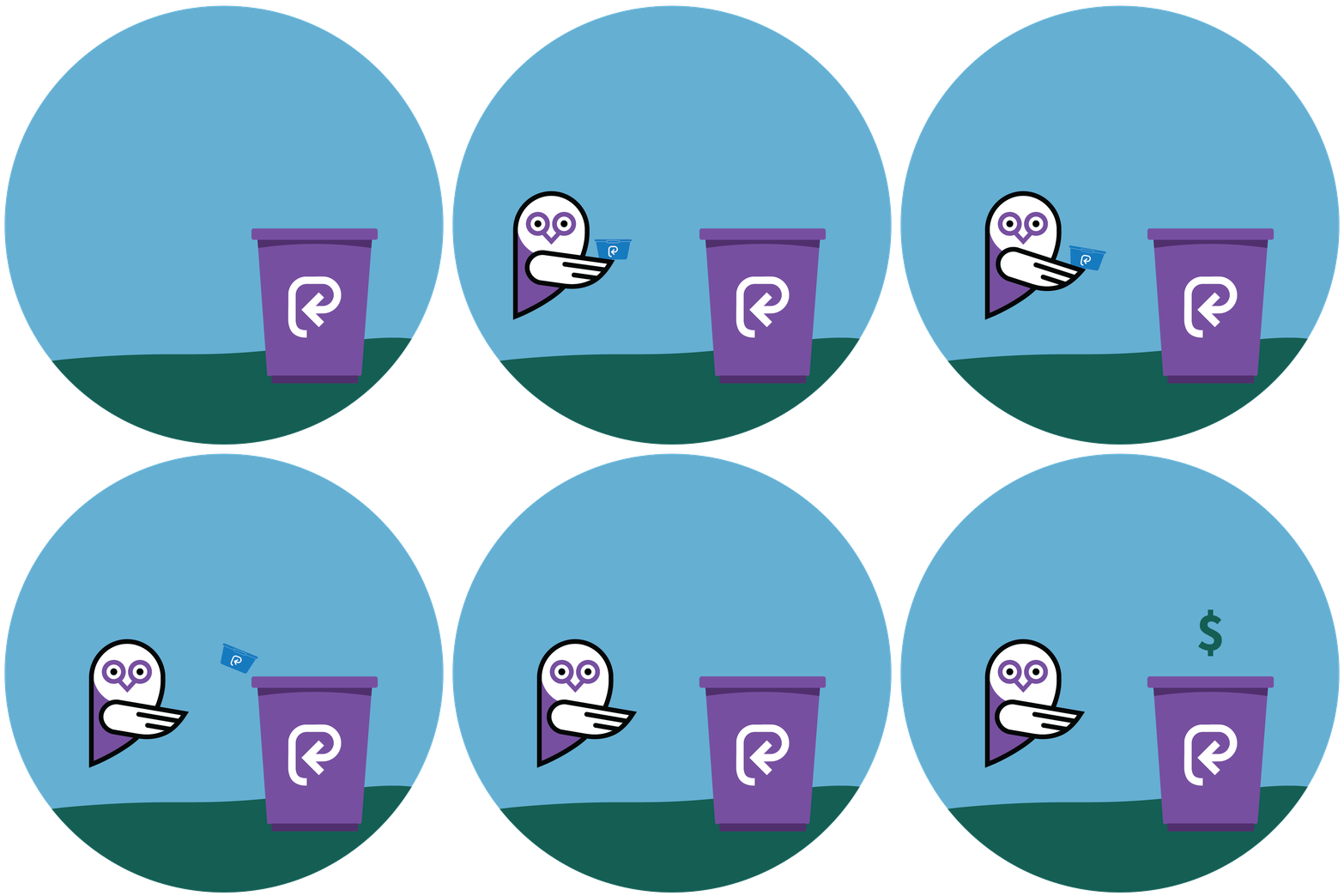
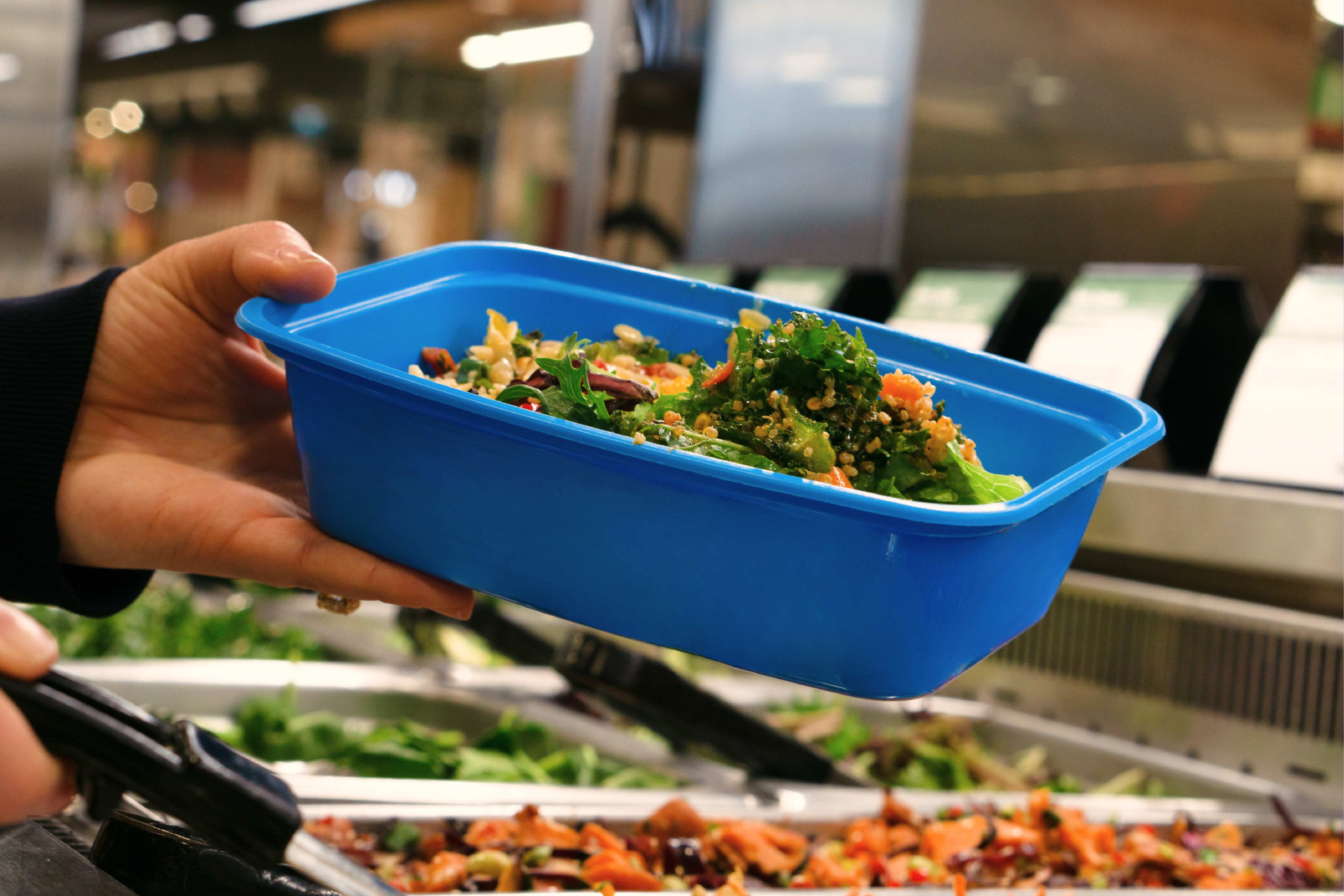
At participating cafes, your to-go order will come in a Friendlier container that is designed to be returned. The containers are durable, portable, and better than disposable.
Most of the environmental impact of takeout packaging happens before it ever reaches your hands—during manufacturing, processing, and transportation. Single-use containers are used once, then thrown away, leading to more resource extraction and planet-warming emissions across the supply chain.
Reusable containers are designed to circulate–put back into use for another meal. The more times a container is reused, the lower its environmental impact becomes.
Every return helps avoid unnecessary waste and reduces the need to manufacture new disposable containers. Enjoy. Scan. Return. Repeat.
The next generation of takeout packaging is here. Every container returned saves energy, water, and avoids excess waste from single-use packaging. Join us in testing out the future of campus takeout.

The initial pilot is launching at CoHo Cafe at the Alumni Center and will expand to CoHo at Tresidder. Check back as more cafes will be added.
At or near the cafe you purchased your food or drink from.
Nope! Scrape food and dump liquids into the compost bin, and toss it in a Friendlier return bin.
Please still scan and return it to receive your deposit. We will make sure it gets properly recycled.
There’s no limit! Each container will include a refundable deposit.
Reusable to-go programs are already in place at many colleges and universities, including UC Berkeley, UC Davis, and UCLA. There are also many cities in the Bay Area (and beyond) that offer reusable to-go programs, including Redwood City, San Mateo, Mountain View, Alameda, Berkeley, and Oakland. In addition, the Stanford Hospital has a reusable takeout program.
The easiest way to get your deposit back is to download the Friendlier app from the App Store or Google Play. From the app, scan the code on the container. Return the container to the cafe and drop it in a Friendlier bin. Once you set up your payment method in the app, you will receive your money through Zelle. Note: Use the email associated with your Zelle account.
Prefer not to download the app? Scan the QR code on the container, enter your email & three-digit pin located on the container. Return to the designated bin. You will receive an email to set up a profile to claim your deposit.
Fun fact for app users: you can see your impact, get cool badges, and win prizes!
Nope! When you scan the QR code on the container, you will be directed to a webpage where you can claim your deposit using your Zelle email and the container number located on the sticker.
Your email address is used only to return your deposit and is not shared. However, if you do not wish to share an email address, you can scan the container and choose to donate your deposit to a local charity—no email address required.
No. You do not need to provide any banking or credit card details. The deposit is sent via email through Zelle.
An email address is required to claim your deposit. However, if you do not wish to share your personal email address, you can click the “Quick Donate” button after scanning the container without entering your email.
Once you return your container to a Friendlier bin and claim your deposit, you will receive your money back in about 3-5 days (depending on your bank).
That’s okay! When cashing out, you will have the option to receive a gift card that you can use the next time you visit the cafe.
Nope! No official deadline, though we do recommend returning it soon after use to help keep it circulating.
No return = no money back. But more importantly, it means one less container in circulation. Return it so it can be washed and used again.
Email info@friendlier.com and they will sort it out!
Email info@friendlier.com and they will sort it out! Please include the email address associated with your account, the container code that you scanned, and where/when you returned the container.
Yes! We take sanitation very seriously. The high-temperature dishwashers are rated to kill over 99.999% of bacteria. This is the same standard used for reusable dishware in restaurants.
Friendlier containers are made from Polypropylene (Plastic #5), which is food-safe and BPA-free. Not all plastics are created equal. Friendlier containers meet the Reusable Packaging System Design Standard established by PR3, an accredited standards developer by the American National Standards Institute (ANSI). The standards include requirements for durability, washability, material type, and recyclability. The standard also prohibits containers from containing materials like polycarbonate, polystyrene, PVC, and polyurethane, as well as chemicals like bisphenols and other restricted substances such as PFAS, phthalates, and heavy metals.
The containers are made from Polypropylene (Plastic #5), which is a microwave-safe material, meaning it can withstand heat without melting or cracking.
All plastics—whether reusable or single-use—can release microplastics over time with excess wear or when exposed to high heat. Friendlier inspects every container upon return and removes any that are scratched or degraded from circulation.
In addition, most conventional paper coffee cups are lined with plastic. For those looking to further reduce potential microplastic exposure, consider bringing a personal stainless-steel cup for your to-go order.
Yes! Most of the environmental impact from packaging happens before you ever use it; during manufacturing, processing, and transportation. Reusable containers only need to be manufactured once, and the impact is driven down with each reuse. When comparing the environmental impact of a single-use container with a Friendlier reusable container, it breaks even after just two uses.
Yes! You are encouraged to bring personal reusable cups and containers for your food and beverage orders.
To achieve the environmental benefits of a reusable system, containers need to be reused enough times to cancel out the emissions from manufacturing, transport, and washing. Friendlier’s plastic containers are designed to be reused up to 100 times, so the environmental benefit compounds with every use. Plastic containers are generally more durable and less likely to dent, crack, or break than steel or glass containers, enabling them to remain in circulation longer.
In addition, plastic containers are more convenient for cafes because they can be stacked, reducing the storage space required.
The containers are made from Polypropylene (Plastic #5), which is food-safe and BPA-free. The containers meet the Reusable Packaging System Design Standard established by PR3, an accredited standards developer by the American National Standards Institute (ANSI). The standards include requirements for durability, washability, material type, and recyclability. The standard also prohibits containers from containing materials like polycarbonate, polystyrene, PVC, and polyurethane, as well as chemicals like bisphenols and other restricted substances such as PFAS, phthalates, and heavy metals.
A lot! Transitioning from a single-use economy to a circular economy is key to building a sustainable future. And reusable to-go programs are a part of that future! Every time a Friendlier container is reused 140g CO₂e are saved. The more containers circulate across campus, the more impact we can collectively have—one meal at a time.
This pilot program is a collaboration between the Office of Sustainability, the CoHo (Coffee House), and Friendlier.
pounds of waste avoided
pounds of greenhouse gas emissions avoided
gallons of water saved
Have a question that isn’t answered above? Looking to provide feedback on the program? We want to hear from you.
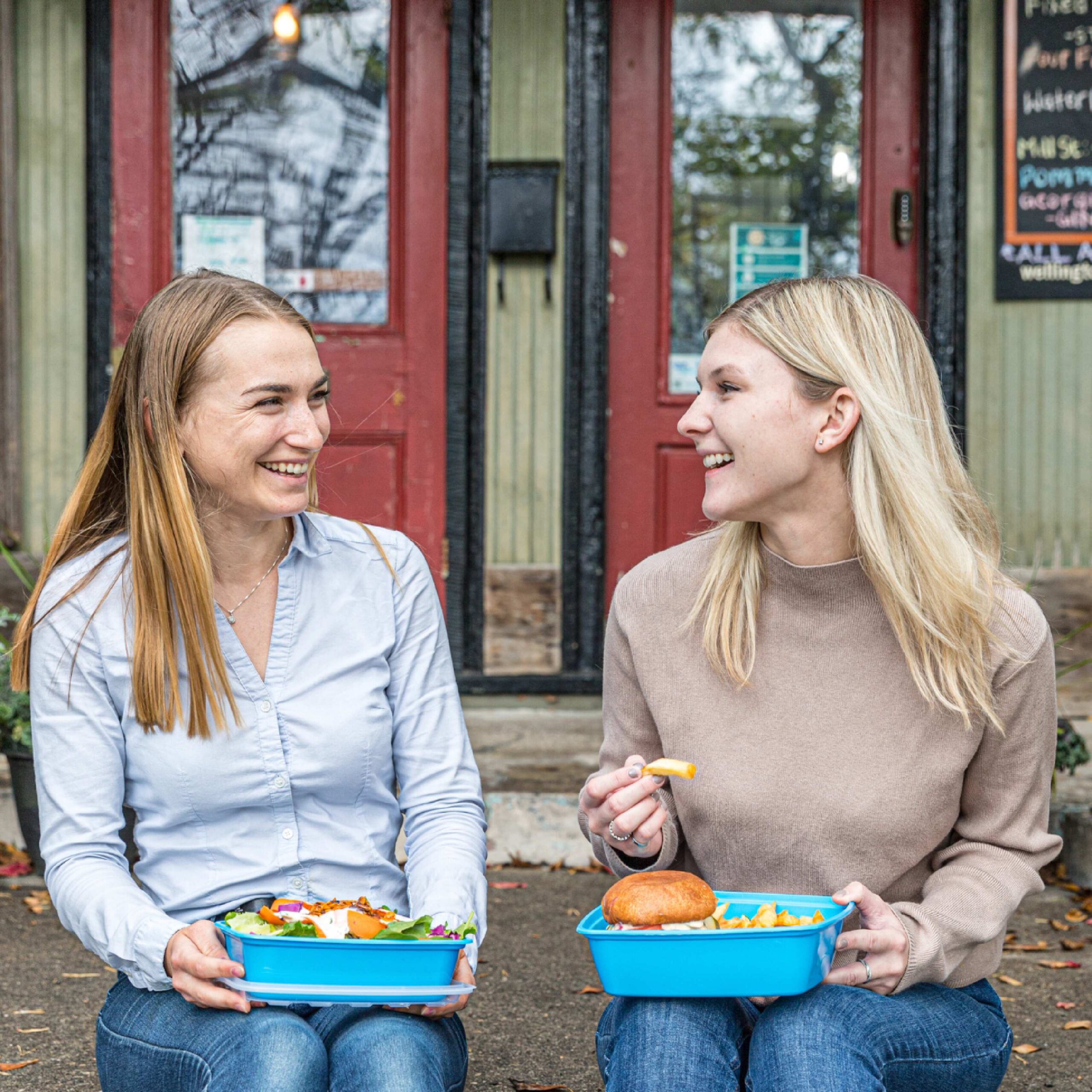
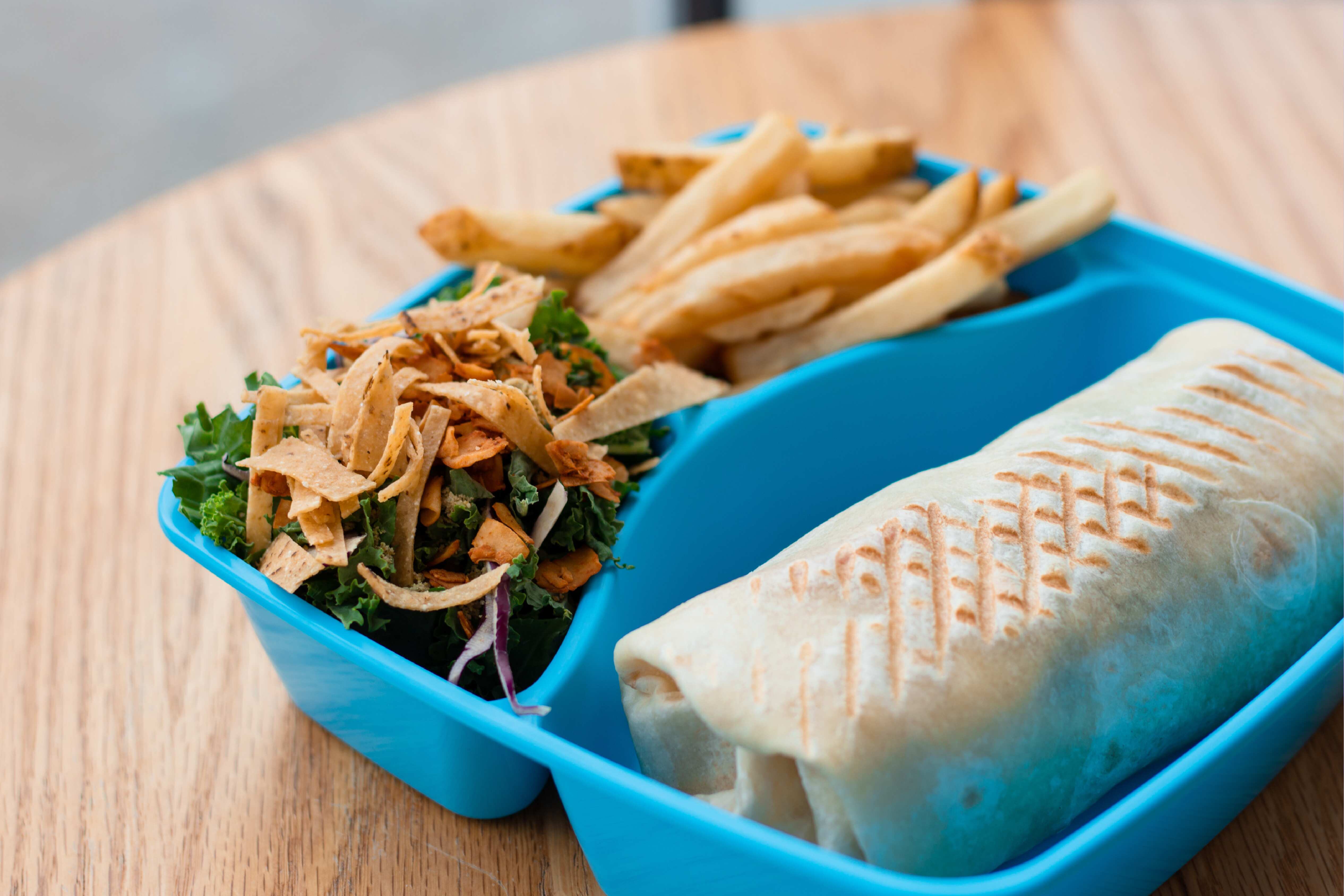
Photos courtesy of Friendlier
How one campus building manager is rethinking the supplies behind scientific discovery –helping labs be more circular.
There is no excerpt because this is a protected post.
There is no excerpt because this is a protected post.