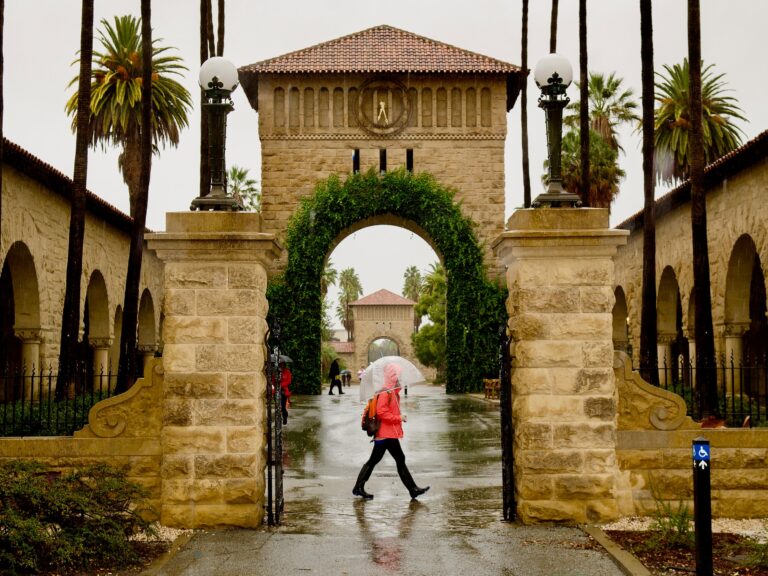
How Stanford is Preparing for This Year’s El Niño
Past infrastructure enhancements for capturing and redirecting rainfall have strengthened campus readiness for winter storms.
The campus electric load is forecasted to exceed 80% capacity each day this week. Please reduce electricity from 2 to 6 p.m. this week to protect our overall campus power supply. (sustainable.stanford.edu/power-smart)

The Stanford Doerr School of Sustainability formally launched in 2022 to catalyze solutions to the increasingly urgent environmental challenges of the 21st century. The school is designed to have impact in three broad areas - earth, climate, and society - by reimagining how academia can benefit the planet and humanity.
Past infrastructure enhancements for capturing and redirecting rainfall have strengthened campus readiness for winter storms.

Staff partnerships are turning surplus furniture into practical solutions–saving money, reducing waste, and creating functional spaces without sacrificing aesthetics.
There is no excerpt because this is a protected post.
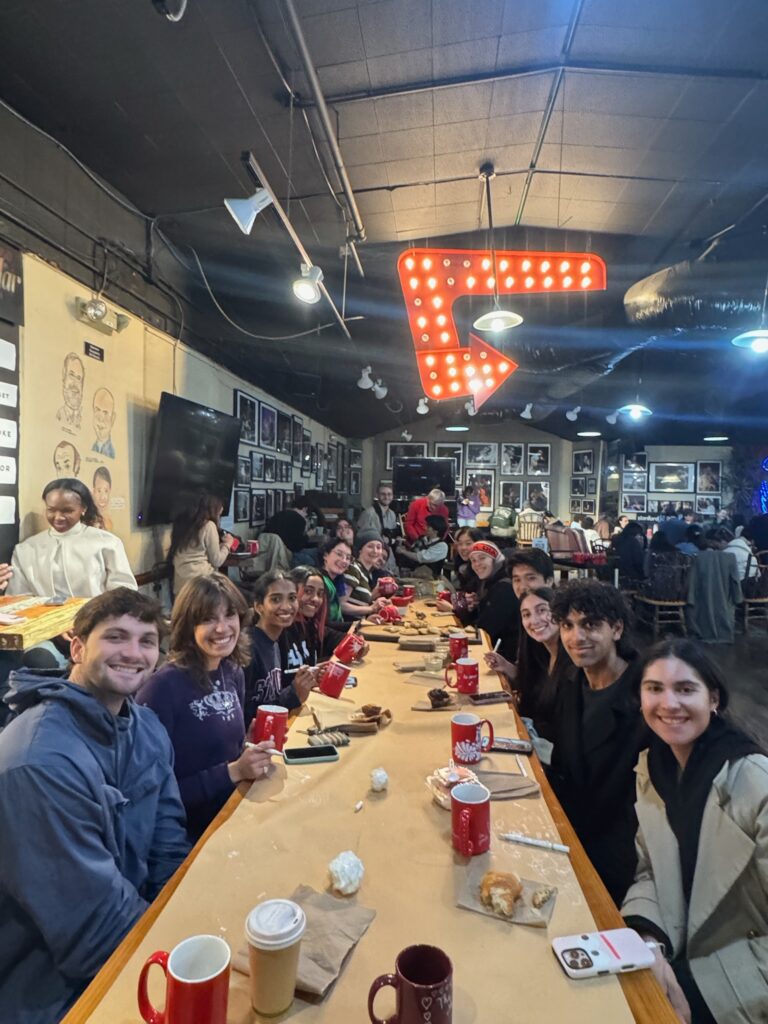
Students are transforming reusable mugs into a community ritual–reducing waste while rebuilding campus culture.
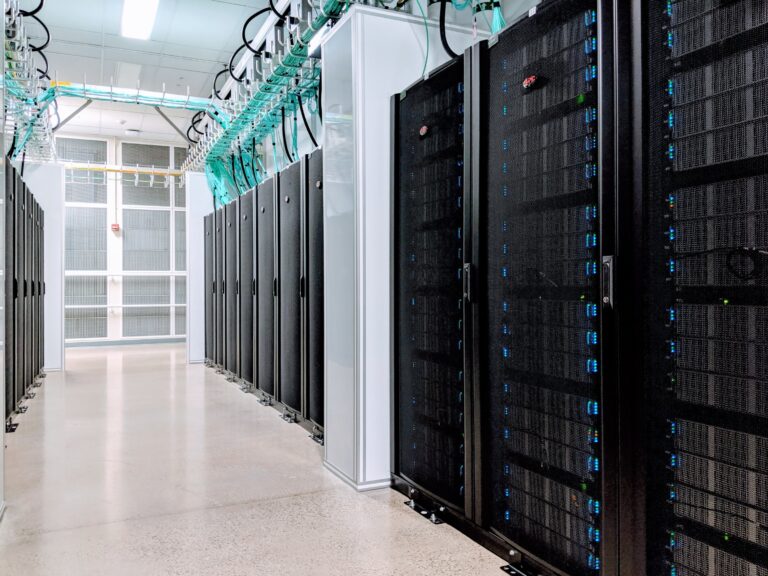
Danica Sun ’28 explored smarter resource use for one of Stanford’s major computing clusters.
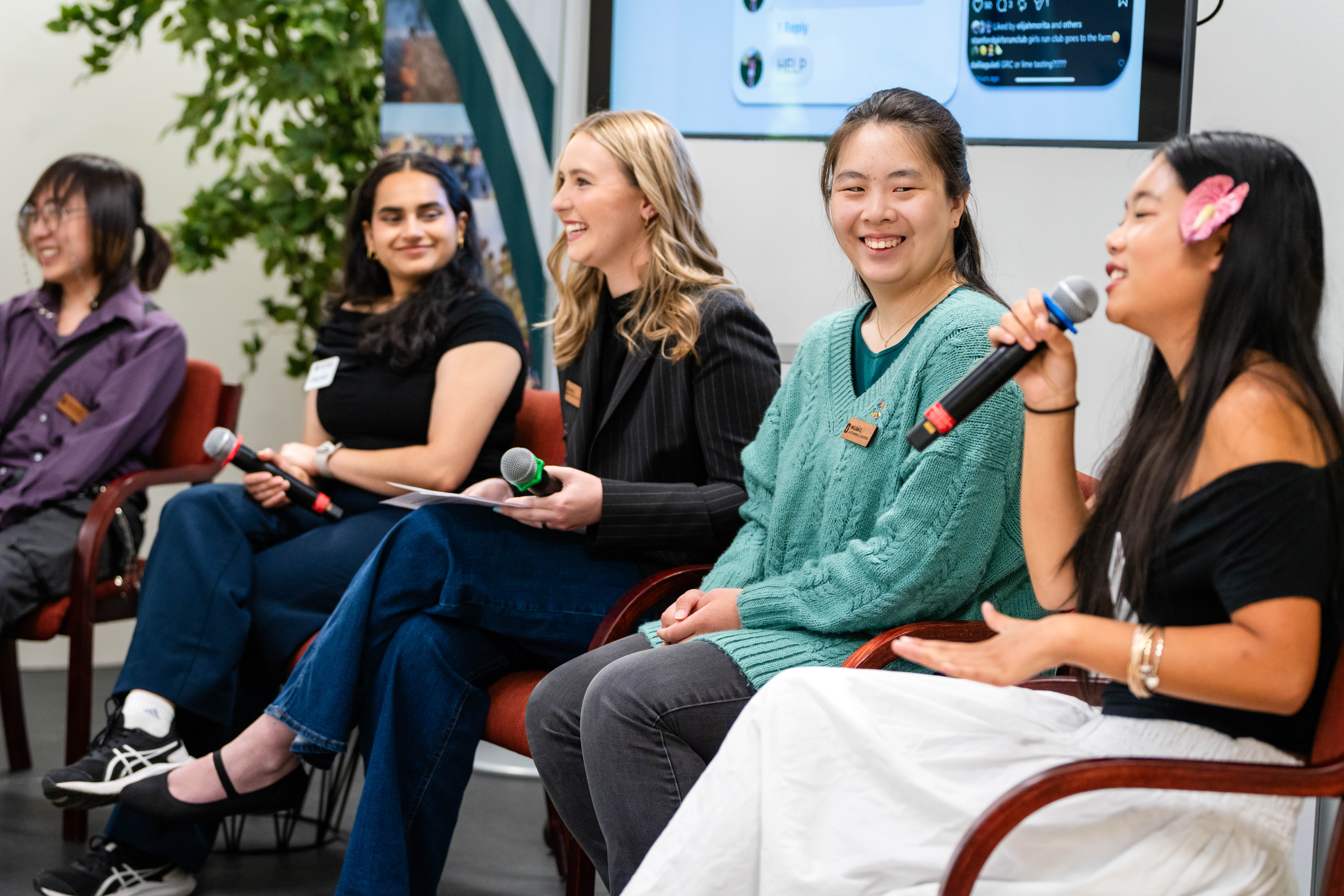
From stakeholders’ willingness for trade-offs to a green game plan, the student interns and fellows presented on their operational accomplishments from the year.
The university earns STARS Platinum in version 3.0, the highest score under the sustainability rating system.
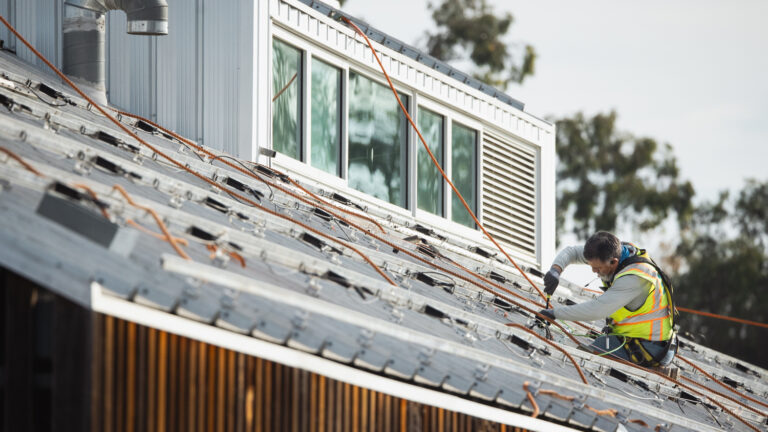
A student-led Living Lab project brings onsite solar power to Stanford’s Educational Farm.

Collecting 500+ donated plates and cutlery, Living Lab Fellow Anna Gomes is building a more communal and sustainable eating culture at Stanford.
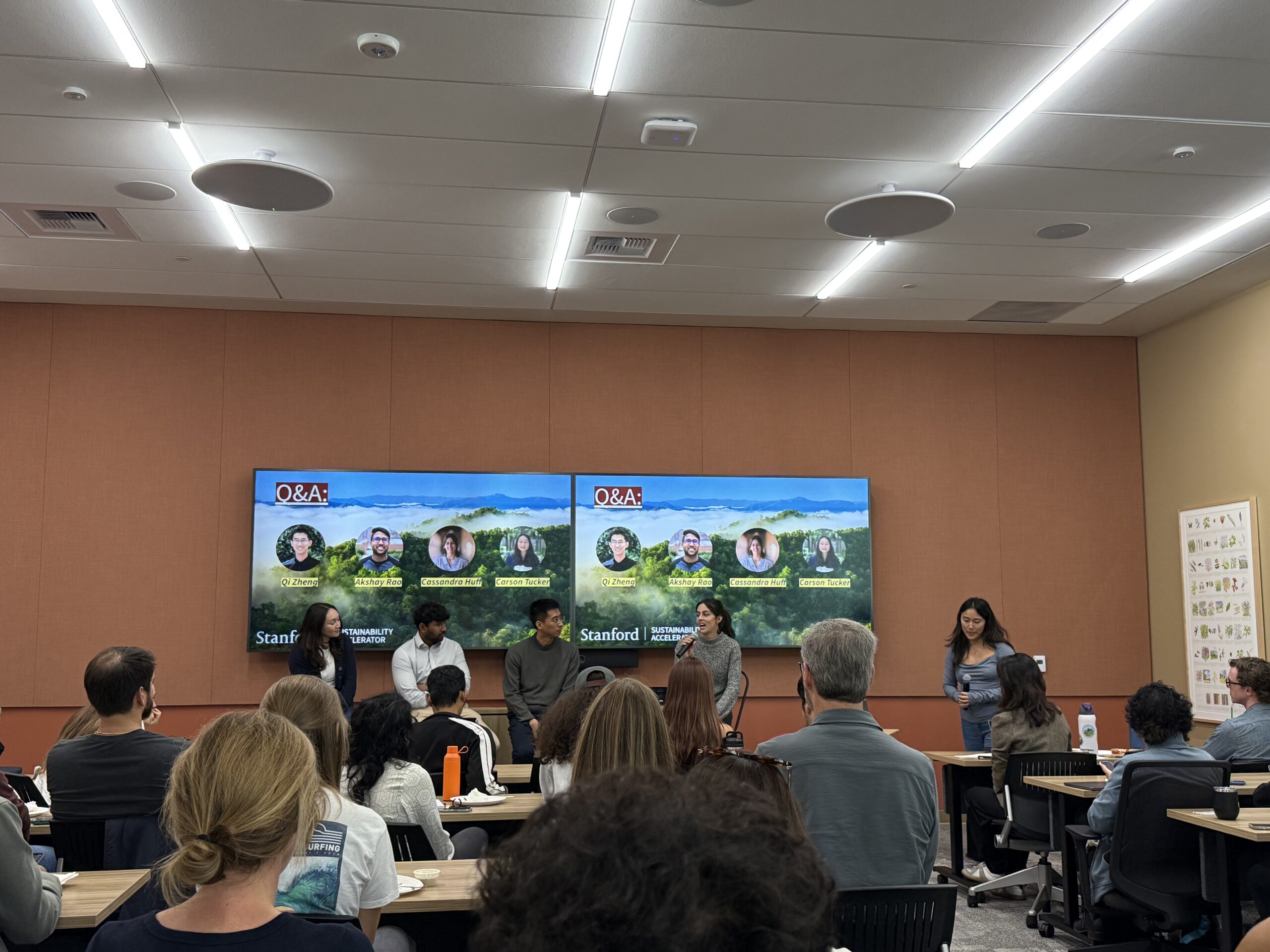
Stanford’s second student-led Climate Week was held in October with over 1,000 participants and 60 events.